
| Created | JUN.06.2026 |
| Revised | JUN.06.2026 |
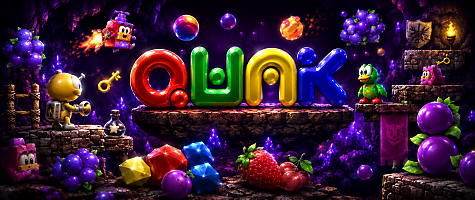
In December 2006, when most publishers had already shifted their attention to the Nintendo DS, a brand-new Game Boy Advance game quietly appeared for sale online. It wasn't available in stores, it wasn't backed by a publisher, and only 300 copies would ever be produced.
The game was Qwak.
For many players, the release seemed to come out of nowhere. In reality, it was the latest chapter in a story that stretched back nearly two decades.
Qwak first appeared in 1989 on the BBC Micro and Acorn Electron, created by British developer Jamie Woodhouse. Inspired by arcade favorites such as Flicky and Bubble Bobble, the game combined platforming, puzzle-solving, and score chasing into a deceptively simple formula. Players guided a small green duck through maze-like levels filled with fruit, treasure, enemies, and hidden bonuses.
The game developed a loyal following and later received an expanded Amiga release through Team17 in 1993. With improved graphics, new features, and multiplayer support, the Amiga version became the best-known edition of Qwak and helped establish its reputation as a cult classic among retro gaming enthusiasts.
Most games from that era faded away as hardware generations came and went. Qwak took a different path.
Over the years, Woodhouse continued refining and revisiting the game, eventually setting his sights on Nintendo's Game Boy Advance. The timing was unusual. By 2006, the GBA was nearing the end of its commercial life. The Nintendo DS had already been on the market for two years, publishers were moving on to newer hardware, and entirely new Game Boy Advance releases were becoming increasingly rare.
Yet Woodhouse believed Qwak would be a perfect fit for Nintendo's handheld.
After discussions with publishers failed to produce a version he was happy with, he decided to release the game himself. Rather than hand the project over to a third party or compromise its design, he self-published Qwak and sold it directly through the official Qwak website.
To support the release, Woodhouse took an approach that feels surprisingly modern today. He maintained a dedicated website, posted development updates, shared screenshots, and even released a downloadable demo so players could try the game before buying it.
The pricing was unusually modest: the Game Boy Advance cartridge sold for just £15, with free worldwide postage included. For a brand-new physical release at the time, it was widely regarded as a bargain, especially given its limited nature.
The finished product was unlike almost anything else on the Game Boy Advance.
Released on December 15, 2006, Qwak arrived as a physical cartridge complete with packaging and a printed manual. Only 300 copies were manufactured, and once they sold out, no additional production run was planned. Unlike traditional Game Boy Advance releases, Qwak was not licensed by Nintendo, was not manufactured through Nintendo’s official publishing channels, and was not distributed through retail stores. It existed entirely outside the normal commercial ecosystem of the platform.
In effect, Qwak was a brand-new physical Game Boy Advance release created without a publisher, without retail distribution, and without Nintendo’s involvement. Even in 2006, that was highly unusual.
Demand for the game was steady rather than explosive, but over time the entire production run sold through. By late December 2009, all 300 cartridges had been sold.
The game itself proved that the effort was worthwhile.
The Game Boy Advance was an excellent match for Qwak's arcade-style design. Across eighty levels, players guide the determined duck through colorful stages packed with fruit, treasure, enemies, keys, and power-ups. The goal is simple: collect the required keys and find the exit. As the game progresses, however, levels become increasingly intricate, demanding careful route planning, efficient item collection, and precise timing.
Like the arcade games that inspired it, Qwak is easy to understand but difficult to master. Quick reflexes help, but success also depends on learning enemy patterns, managing resources, and discovering the most efficient path through each stage. The result is a game that's easy to pick up for a few minutes but surprisingly difficult to put down.
Contemporary reviewers praised the game's polished presentation and addictive gameplay, particularly given its independent origins. For players fortunate enough to secure one of the limited cartridges, Qwak offered something increasingly uncommon in 2006: a brand-new Game Boy Advance game built around timeless gameplay rather than industry trends.
Looking back, the release feels remarkably ahead of its time. Today, independent developers regularly sell games directly to players, release demos, share development updates online, and build communities around their projects. In 2006, those practices were far less common—especially on a closed console platform like the Game Boy Advance.
If you wanted to buy Qwak, you bought it directly from the person who created it.
That unusual approach has helped earn the game a unique place in retro gaming history. While the cartridge's rarity has made it a sought-after collector's item, the real story is the determination behind it. Nearly twenty years after its release, Qwak remains a fascinating example of what one developer could accomplish with enough passion, persistence, and belief in a game that deserved another chance.
For a small green duck that first appeared on an Acorn computer in 1989, that's a remarkable legacy.


